ABOUT
|
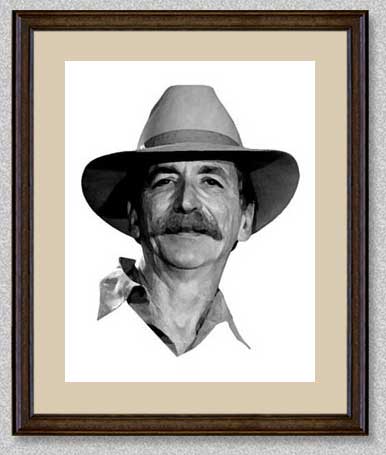
| Maine artist B.L. Ander presents realism art of animal portraits and landscape that remain true to nature. |
| About B. L. ANDER |  |
ARTIST STATEMENT Creation turns me on. From a blank surface to the finished work of art, it's the process that feeds my soul. To me, art is a lifestyle, a compulsion and a passion. With a formal education in the arts spanning over eight years and an apprenticeship lasting two, I found myself addicted to the learning process. Now after more than forty years of practice, I still consider myself a perpetual student of art. In my opinion, to stop learning would be tantamount to artistic stagnancy. . . so, the exploration continues. For a long time, I studied widely varying methods of visual interpretation and composition, ultimately concluding that the skill of seeing is a crucial part of an artist's education, requiring in-depth study. I believe a strong development of an artist's visual perceptions is a prerequisite to mastering most visual arts. As an avid outdoorsman, I spend a great deal of time exploring different ways to see the details of Mother Nature. With a camera always at the ready, even in my kayak, I hunt for wildlife or powerful landscapes or tiny details. The camera is an essential tool in my artist's bag. I have explored most every media, though as of late, the majority of my finished pieces are done in colored pencil, a media lending itself nicely to high detailed realism art. Though I prefer to work in Realism, I have done many Abstract, Fantasy, Surrealism, Expressionism and Impressionism works too. I studied for many years in sculpture such as wood, stone, steel, concrete and even industrial plastics. In the 1970s and 80s, I was better known for my light sculptures; some computer driven while others dealt with natural light and form. To this day, I still put my hand to the three dimensions on occasion. It's all a learning process to me, one that will continue until I am unable. Usually I set a goal for any particular project. For example; to do a pencil drawing of a foggy scene with a dingy in the foreground, showing subtle hints of a sunrise, all done in 45 degree right angle stroked colored pencil lines or crosshatched layers of color. For accuracy, I prefer to use a grid and proportional divider, often having the subject displayed on a computer screen with an overlay proportional grid as a guide. On the following project I may try to combine light and shadow to create a moody image in pastel oils with a looser style utilizing interpretations rather than details. Each artwork possesses its own distinctive characteristics, generally driven by personal mood. Once complete, I am always faced with the inevitable question, "What's next?" Above all, I remain true to nature in my renderings. EDUCATION Jacksonville University - Fine Art and Design Fort Lauderdale Art institute - Commercial Art and Design Atlanta College of Art - Fine Arts (Painting & Sculpture) |
|
|
||||||||